
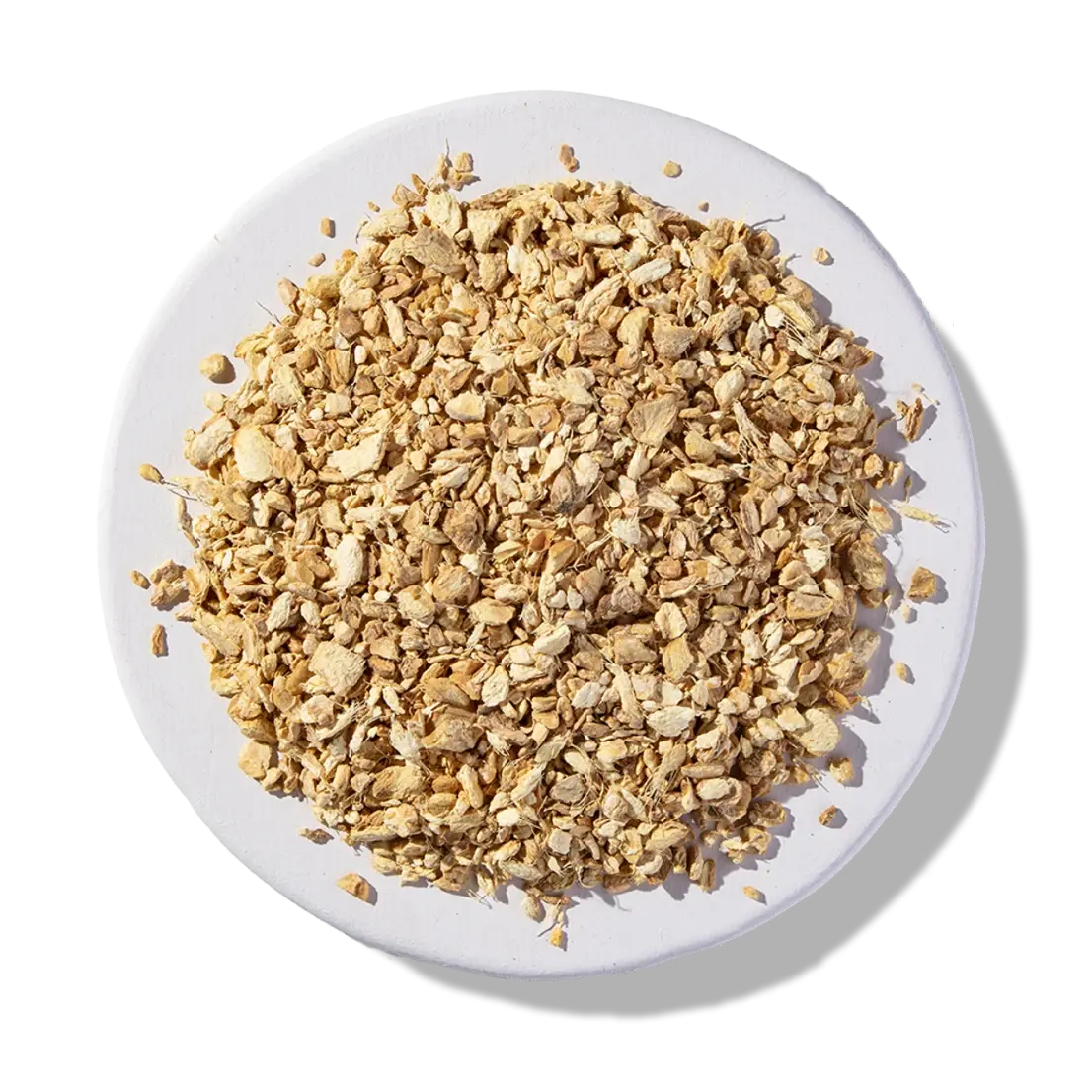
Ginger Root Cut and Sifted (Organic)
Botanical Name: Zingiber officinale Roscoe
Common Names: Ginger • Ginger Root • Common Ginger
Plant Family: Zingiberaceae (Ginger Family)
Plant Part Used: Rhizome (commonly called root)
Product Type: Dried Herbal Rhizome
Herbal Classification: Warming Botanical • Traditional Digestive Herb • Aromatic Carminative • Culinary Botanical
Product Description
Discover Ginger Root (Zingiber officinale), a warming, aromatic botanical celebrated for its distinctive spicy flavor and longstanding role in traditional herbalism, culinary preparations, and digestive wellness.
Although commonly called ginger root, the portion used is technically a rhizome, an underground stem containing naturally occurring aromatic oils and pungent compounds.
Ginger is especially recognized for its traditional association with digestive comfort, occasional nausea, warming circulation, and general physical wellness.
Modern clinical research has investigated ginger for nausea, particularly pregnancy-related nausea, as well as certain digestive and inflammatory conditions. Evidence varies by indication, preparation, and dosage.
Gingerols
Gingerols are major pungent compounds found in ginger, particularly fresh rhizomes.
Botanical Significance: Investigated for their influence on digestive function, nausea-related pathways, and inflammatory signaling.
Shogaols
Shogaols develop in greater concentrations during drying and heating.
Botanical Significance: Studied for antioxidant, gastrointestinal, and inflammation-related activity, primarily in laboratory investigations.
Zingerone
Zingerone is an aromatic compound associated with heated or processed ginger.
Botanical Significance: Contributes to ginger's characteristic flavor and has attracted interest in antioxidant research.
Volatile Oils
Ginger contains aromatic compounds, including zingiberene and related sesquiterpenes.
Botanical Significance: These contribute to ginger's fragrance, warming sensory qualities, and distinctive botanical profile.
Phenolic Compounds
Ginger contains additional naturally occurring plant compounds.
Botanical Significance: These contribute to its phytochemical complexity and have been studied for potential biological activity.
Digestive System
Ginger has a longstanding reputation as a warming digestive botanical.
Traditional Areas of Interest:
Occasional nausea and digestive discomfort.
Traditional support for bloating and gas.
Digestive comfort after meals.
Warming herbal preparations.
Herbal Perspective: Human research supports ginger's potential usefulness for certain types of nausea, particularly pregnancy-related nausea.
Gastrointestinal Motility
Ginger has been investigated for its potential influence on stomach emptying and gastrointestinal movement.
Traditional & Research Areas of Interest:
Gastric motility research.
Post-meal digestive comfort.
Traditional carminative preparations.
General gastrointestinal wellness.
Musculoskeletal System
Ginger has historically appeared in warming preparations associated with occasional physical discomfort.
Traditional Areas of Interest:
Traditional joint-comfort formulas.
Warming botanical preparations.
Menstrual discomfort research.
General musculoskeletal wellness.
Cardiovascular & Circulatory Wellness
Ginger has traditionally been described as a warming botanical associated with circulation.
Traditional & Research Areas of Interest:
Traditional warming preparations.
Cardiovascular wellness research.
Blood pressure investigations.
General metabolic research.
Immune & Inflammatory Pathways
Ginger contains compounds investigated for antioxidant and inflammation-related activity.
Traditional & Research Areas of Interest:
Gingerol and shogaol research.
Cellular inflammatory pathways.
Antioxidant investigations.
Seasonal warming herbal blends.
Additional Traditional Wellness Areas
Traditional Digestive Formulas: Commonly incorporated into herbal blends associated with nausea, bloating, and digestive comfort.
Culinary Herbalism: Widely used in teas, broths, soups, spice blends, and warming beverages.
Menstrual Wellness: Studied in certain preparations for primary menstrual discomfort.
Seasonal Herbal Blends: Traditionally combined with lemon, cinnamon, cloves, and other warming botanicals.
Botanical Education: Offers opportunities to explore rhizome anatomy, gingerols, shogaols, and the effects of drying and heating on plant chemistry.
Traditional Ginger Root Decoction
Add approximately 1–2 teaspoons of dried ginger root to 8–12 ounces of water.
Bring to a gentle simmer.
Cover and simmer for 10–15 minutes.
Remove from heat and strain thoroughly.
Allow to cool to a comfortable drinking temperature.
This is a traditional beverage preparation, not a clinically established therapeutic dose. Strength varies with the form and amount of ginger used.
Cautions
Pregnancy: Ginger has been studied for pregnancy-related nausea, but concentrated medicinal use should be discussed with a prenatal healthcare professional.
Breastfeeding: Culinary amounts are generally familiar in foods; safety information for concentrated medicinal preparations is limited.
Blood-Thinning Medications: Consult your prescriber before using medicinal quantities with warfarin, aspirin, clopidogrel, or other anticoagulant or antiplatelet medications.
Bleeding Disorders: Seek medical guidance before concentrated use.
Surgery: Inform your surgical team about herbal supplement use.
Gallstones: Ginger may influence digestive secretions. Consult a healthcare professional before medicinal use if you have gallstones or biliary disease.
Acid Reflux: Ginger may aggravate heartburn or reflux in some individuals.
Digestive Sensitivity: Large amounts may cause abdominal discomfort, diarrhea, or mouth irritation.
Diabetes Medications: Concentrated preparations may influence blood glucose. Monitor with professional guidance.
Blood Pressure Medications: Consult a healthcare professional before combining concentrated ginger supplements with blood pressure medication.
Medication Interactions: Clinical interaction information varies by dose and preparation.
Children: Use age-appropriate culinary amounts and seek professional guidance before medicinal use.
Allergies: Discontinue use if rash, itching, swelling, or other allergic symptoms occur.
This product is offered as a traditional botanical herb and is not intended to diagnose, treat, cure, or prevent disease.
May Support:
Digestive System, Nervous System, Circulatory System, Immune System, Endocrine System, Respiratory System