
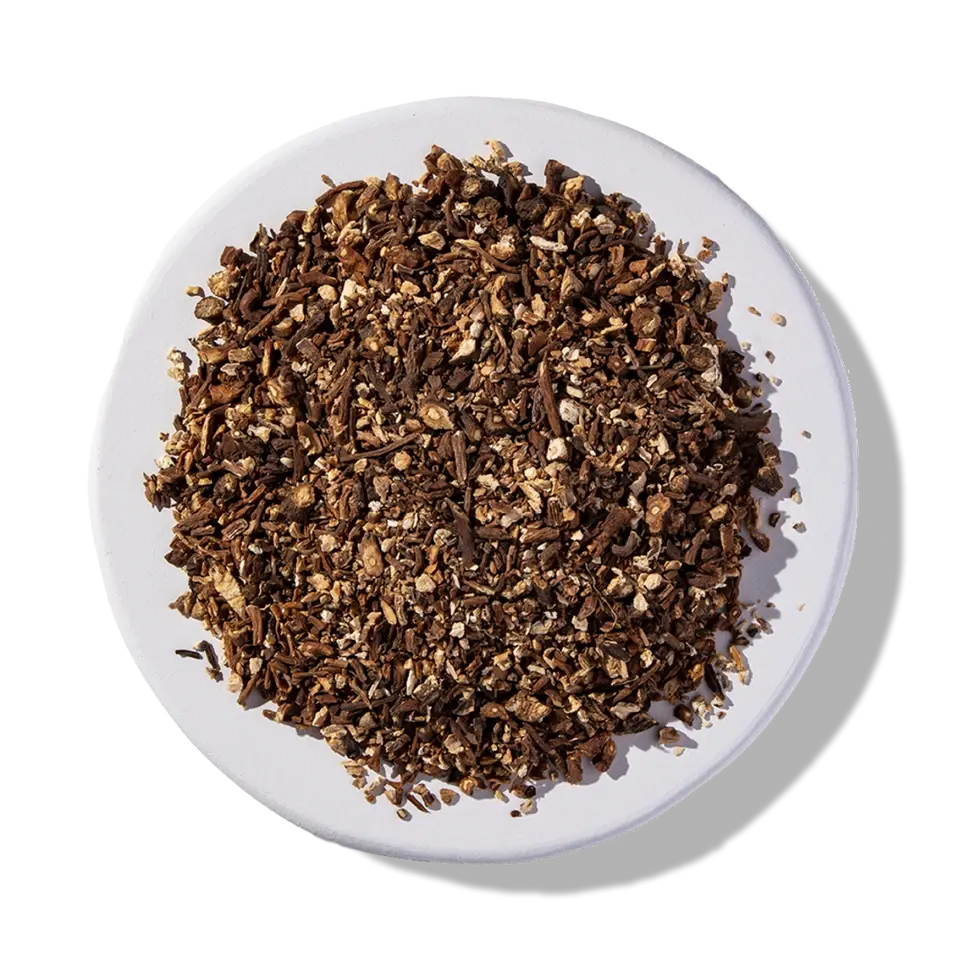
Dandelion Root Raw Cut and Sifted (Organic)
Botanical Name: Taraxacum officinale F.H. Wigg. (species aggregate)
Common Names: Dandelion Root • Common Dandelion • Lion's Tooth
Plant Family: Asteraceae (Daisy Family)
Herbal Classification: Traditional Bitter Tonic • Digestive Botanical • Prebiotic Fiber Source • Traditional Hepatic Herb
Product Description
Unlike dandelion leaf, which is traditionally associated with urinary wellness, dandelion root is particularly valued for its bitter constituents and naturally occurring inulin.
Dandelion root contains inulin, sesquiterpene lactones, phenolic acids, and other plant compounds that contribute to its botanical profile. Its earthy, pleasantly bitter flavor makes it suitable for traditional decoctions, herbal blends, and roasted botanical beverages.
Inulin
Dandelion root contains inulin, a naturally occurring fructan fiber.
Botanical Significance: Inulin can be fermented by certain intestinal microorganisms and is studied for its prebiotic properties. The amount obtained from a strained decoction varies and should not be assumed to equal a standardized fiber supplement.
Sesquiterpene Lactones
Dandelion root contains bitter constituents, including sesquiterpene lactones.
Botanical Significance: These compounds contribute to dandelion's bitter flavor and traditional classification as a digestive tonic.
Phenolic Acids
Dandelion contains phenolic compounds, including chicoric and chlorogenic acids.
Botanical Significance: These compounds contribute to its phytochemical profile and have attracted interest in antioxidant and metabolic research.
Triterpenes
Dandelion root contains triterpenes and related naturally occurring compounds.
Minerals & Other Nutrients
Dandelion root contains naturally occurring minerals and carbohydrates.
Botanical Significance: Nutrient content varies according to growing conditions, processing, and preparation.
Digestive System
Dandelion root has a longstanding reputation in Western herbalism as a bitter digestive tonic.
Traditional Areas of Interest:
Traditional after-meal herbal preparations.
Occasional digestive heaviness.
Bitter botanical infusions and decoctions.
Historical appetite-supporting formulas.
Herbal Perspective: Dandelion root's digestive uses are historically established.
Hepatobiliary System
Dandelion root has historically appeared in herbal formulas associated with liver and gallbladder function.
Traditional Areas of Interest:
Traditional hepatic herbal preparations.
Historical bitter formulas associated with bile production.
Digestive preparations emphasizing liver and gallbladder wellness.
General hepatobiliary wellness traditions.
Herbal Perspective: Laboratory and animal studies have investigated dandelion extracts for liver-related effects.
Digestive Microbiome
Dandelion root contains inulin, a fermentable dietary fiber.
Traditional & Research Areas of Interest:
Prebiotic fiber research.
Intestinal microbiome studies.
Dietary fiber and digestive wellness.
General gastrointestinal nutritional support.
Herbal Perspective: Inulin has recognized prebiotic properties, but the amount present in ordinary dandelion root preparations varies.
Metabolic Wellness
Dandelion root contains plant compounds investigated for potential effects on metabolic processes.
Traditional & Research Areas of Interest:
Antioxidant-related research.
Plant polyphenol investigations.
Carbohydrate metabolism studies.
General metabolic wellness.
Herbal Perspective: Preliminary research has explored dandelion extracts for glucose and lipid-related effects.
Urinary System
Although dandelion leaf is more strongly associated with traditional diuretic preparations, the root has also appeared in historical urinary wellness formulas.
Traditional Areas of Interest:
Traditional botanical fluid-balance preparations.
Historical urinary wellness formulas.
Seasonal herbal decoctions.
General urinary system traditions.
Additional Traditional Wellness Areas
Traditional Digestive Tonics: Historically incorporated into bitter preparations associated with digestive comfort.
Liver & Gallbladder Traditions: Included in historical herbal formulas associated with hepatobiliary wellness.
Prebiotic Fiber Research: Contains naturally occurring inulin, a fermentable plant fiber.
Roasted Herbal Beverages: Traditionally roasted and brewed as a naturally caffeine-free coffee alternative.
Traditional Herbal Decoction
Add approximately 1–2 teaspoons of dried dandelion root to 8–12 ounces of water.
Bring to a gentle simmer.
Cover and simmer for 10–20 minutes.
Remove from heat and strain thoroughly.
Enjoy warm or allow to cool.
This is a general traditional beverage preparation method, not a clinically established therapeutic dose.
Herbal Blending
Dandelion root's earthy, bitter flavor pairs well with ginger, cinnamon, chicory root, burdock root, peppermint, and other compatible botanicals.
Roasted Botanical Beverage
Food-grade roasted dandelion root may be brewed as a naturally caffeine-free coffee alternative. Unroasted dandelion root has a different flavor profile and should not be described as roasted unless specifically processed that way.
Cautions
Asteraceae Allergies: Avoid if allergic to dandelion or related plants, including ragweed, daisies, and chrysanthemums.
Gallstones & Bile Duct Obstruction: Avoid medicinal use without medical guidance. Bitter herbal preparations may be inappropriate when bile flow is obstructed.
Gallbladder Disease: Consult a healthcare professional before use if you have gallbladder inflammation or other significant gallbladder conditions.
Liver Disease: Dandelion root is not a treatment for liver disease. Seek professional guidance before medicinal use.
Kidney Disease: Consult a healthcare professional before medicinal use, particularly if fluid or electrolyte balance must be monitored.
Diuretic Medications: Potential additive effects are not well characterized. Seek professional guidance.
Lithium: Possible changes in fluid balance may affect lithium safety. Consult your prescriber before use.
Diabetes Medications: Preliminary research suggests possible glucose-related effects, but clinically significant interactions remain uncertain.
Blood-Thinning Medications: Discuss regular medicinal use with your healthcare professional, particularly if taking warfarin.
Digestive Sensitivity: Inulin and bitter compounds may contribute to gas, bloating, or gastrointestinal discomfort, especially in sensitive individuals.
Pregnancy & Breastfeeding: Ordinary food use differs from medicinal preparations. Safety information for frequent or concentrated medicinal use is insufficient.
Children: Consult a qualified healthcare professional before medicinal use.
Medication Interactions: Comprehensive interaction studies are limited.
This product is offered as a traditional botanical herb and is not intended to diagnose, treat, cure, or prevent disease.
May Support:
Digestive System