

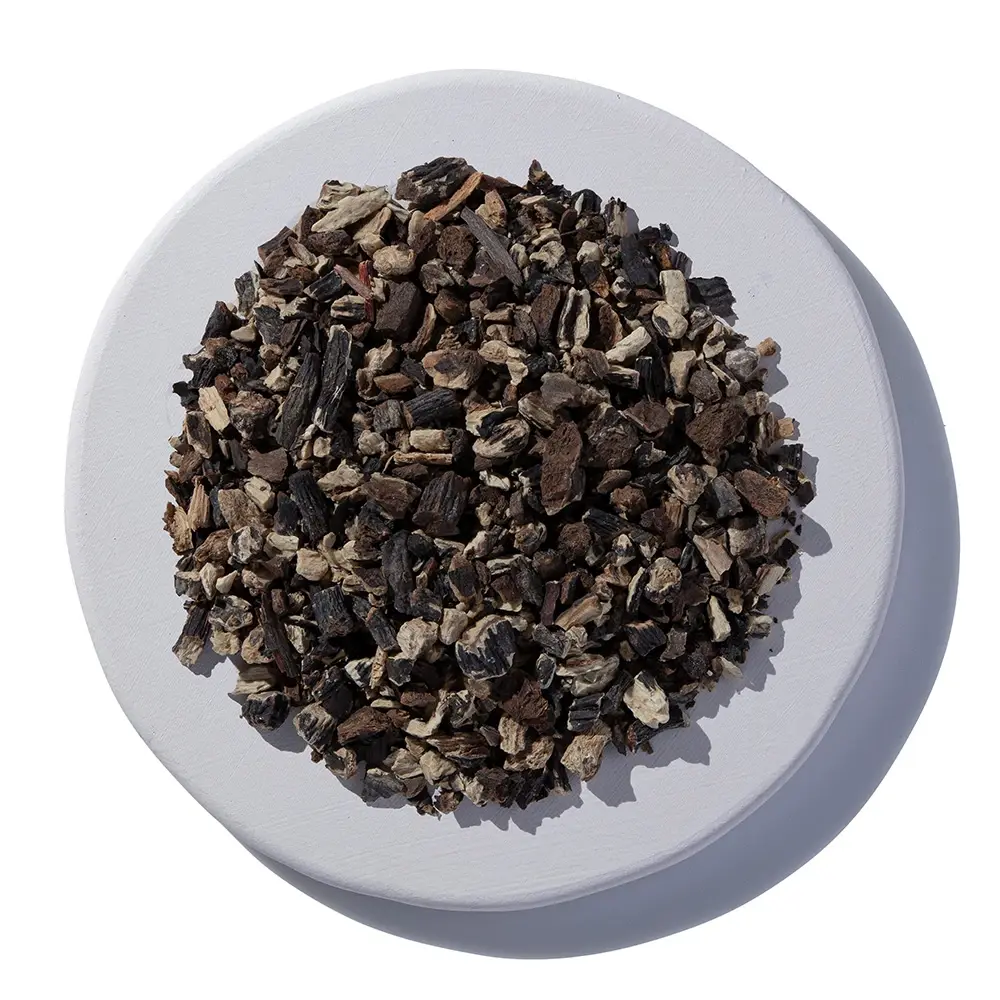
Comfrey Root Cut and Sifted (Organic)
Benefits of Comfrey Root (Symphytum officinale – Root)
Comfrey root is stronger and more concentrated than the leaf, especially in allantoin and mucilage. Because of this, it has a long history of use in topical healing — but also carries higher safety concerns due to pyrrolizidine alkaloids (PAs).
1. Deep Tissue Repair & Regeneration
Extremely rich in allantoin, which encourages rapid cell growth.
Traditionally used to support healing of sprains, strains, bruises, and fractures.
Helps soothe deep tissue discomfort and promote recovery after injury.
2. Bone & Joint Support (“Knitbone”)
Historically used to support bone knitting and connective tissue repair.
Often applied externally for fractures, joint inflammation, and tendon issues.
Supports circulation and nutrient flow to injured areas.
3. Skin Healing & Moisturizing
High mucilage content helps hydrate, soften, and soothe irritated or dry skin.
Used in salves and ointments for minor burns, rashes, and scar support.
Encourages smoother, healthier skin texture.
4. Anti‑inflammatory & Pain Relief
Traditionally used to ease muscle soreness, swelling, and inflammation.
Often included in topical blends for arthritis, back pain, and bruising.
⚠️ Precautions & Risks (Important)
1. Internal Use is Not Recommended
Comfrey root contains higher levels of pyrrolizidine alkaloids (PAs) than the leaf.
PAs can cause serious liver toxicity.
Do not ingest comfrey root in teas, tinctures, capsules, or internal formulas.
2. Pregnancy & Breastfeeding
Avoid entirely due to PA content and potential toxicity.
3. Open or Deep Wounds
Do not apply to deep cuts or puncture wounds.
Rapid tissue growth may seal the surface too quickly and trap infection inside.
4. Long‑Term Topical Use
Use only short-term and on unbroken skin.
Prolonged use may cause skin sensitivity.
5. Children
Not recommended for children due to PA exposure risk.
🌱 Bottom Line
Comfrey root is a powerful topical healer known for deep tissue repair, bone support, and soothing inflammation. It’s best used externally only, in salves, poultices, or creams — and always with awareness of PA-related safety. When used mindfully, it’s one of the strongest plant allies for skin, muscle, and joint recovery.